Fold Lab 2026 event at ARTSLab
ARTSLab recently teamed up with the Fold Lab Collective for a cozy evening inspired by the worlds of Studio Ghibli.

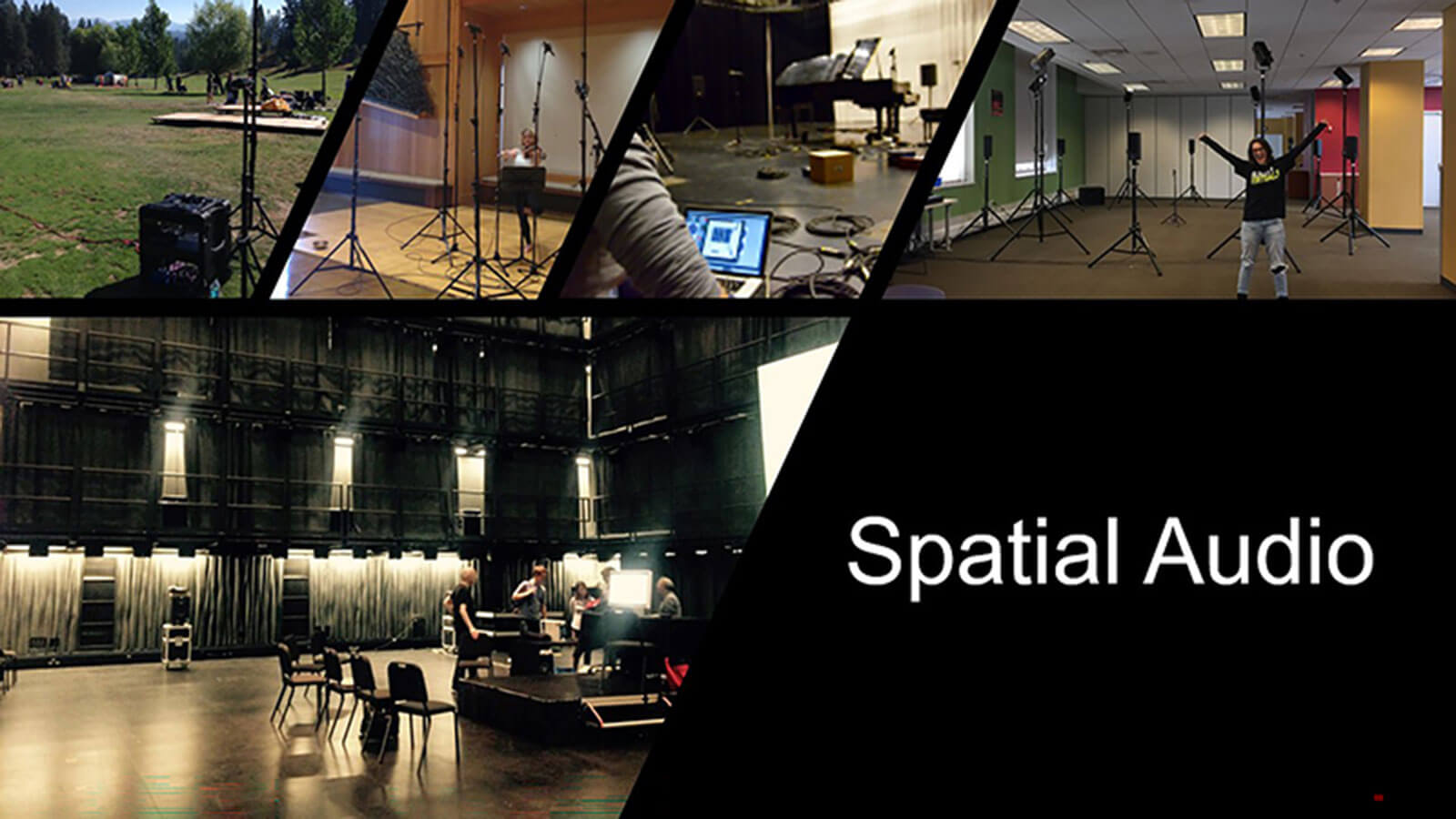
In this CITH Workshop: Sonifying Space, Monica Bolles walks us through a series of modern audio technology and sound art concepts related to spatial audio and data sonification using Max/MSP.
In this CITH Workshop: Sonifying Space, Monica Bolles walks us through a series of modern audio technology and sound art concepts related to spatial audio and data sonification using Max/MSP. Working with solar storm data from NASA, she shows how data can be mapped to different sound elements and then placed within virtual and physical spaces. She breaks down the basics of data parsing, sonification, and spatial audio in a way that feels approachable. Using tools like Max/MSP, TouchOSC, and the IRCAM Spat toolkit, this workshop is a comprehensive introduction to building immersive audio experiences from data.
Monica Bolles is a multi-disciplinary artist who incorporates music composition, digital arts and technology into immersive exhibits and performances. Her subject matter explores science’s objectivity in contrast with art’s subjectivity, asking what it means to be human in the context of modern society. Setting out with a bachelors of science in Music Technology from UC Boulder and a masters of science in Technology, Media and Society from UC Boulder, Monica has collected a list of accomplishments that includes numerous exhibitions, performances, panels, workshops, podcasts, residencies and research. Her exhibitions, presentations and residencies have brought her all over the United States and to Europe, including trips to Germany, Wales, Spain and Denmark.
In part one, Monica introduces us to some of her work in the field of art and music technology, and provides a list of hardware and software requirements that we need to get started. Monica then gives a brief explanation of Max/MSP, which is the primary software she uses to turn data into sound. She discusses the concept of sonification, and brings us to the NASA website where we can obtain the data we’ll be sonifying. The tutorial moves between theoretical discussion, and real-life application, with regular coding-breaks where we get a chance to try out the concepts ourselves. Part one ends with a section on immersive audio and psychoacoustics, which is a field of scientific study that deals with the shape of the ear and how the brains interpret sounds.
Part two begins with an introduction into multi-channel audio, which is the technique of using more audio channels than a typical mono or stereo set-up to add another dimension to the sonic experience. By using a multi-speaker array, and employing spatial audio algorithms, Monica demonstrates how the origin of a sound can be made to move around in physical space. The tutorial ends with a section on OSC controllers, where Monica shows us how we can control parameters in Max/MSP using wireless devices like a phone or pad. After the tutorial Monica demonstrates the culmination of various techniques with a data sonification performance using a quad-speaker array.
Watch Part I and Part II below to follow along.
https://www.youtube.com/watch?v=a5wncYfK-R0
https://www.youtube.com/watch?v=AnjZ0ulDYds
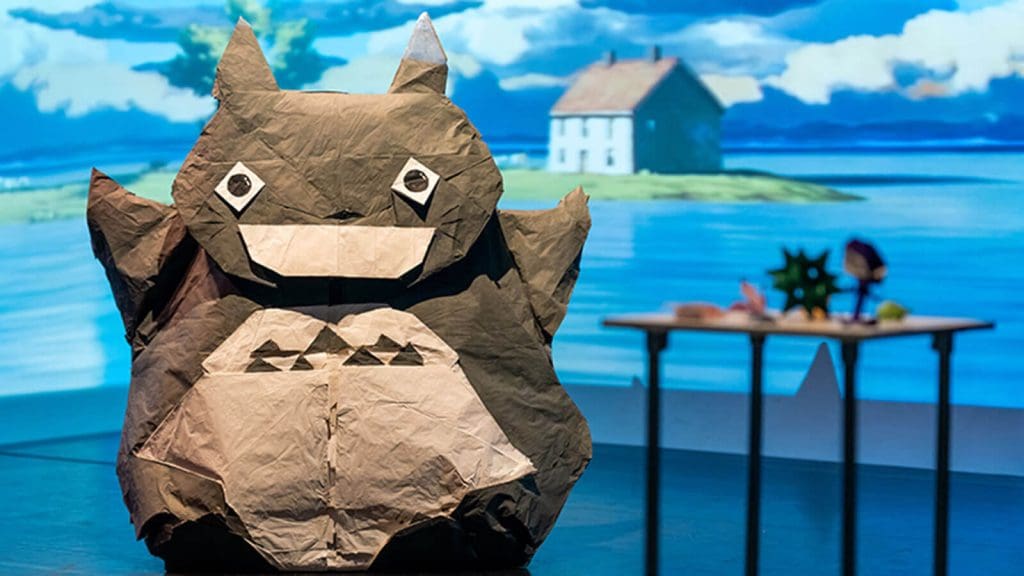
ARTSLab recently teamed up with the Fold Lab Collective for a cozy evening inspired by the worlds of Studio Ghibli.
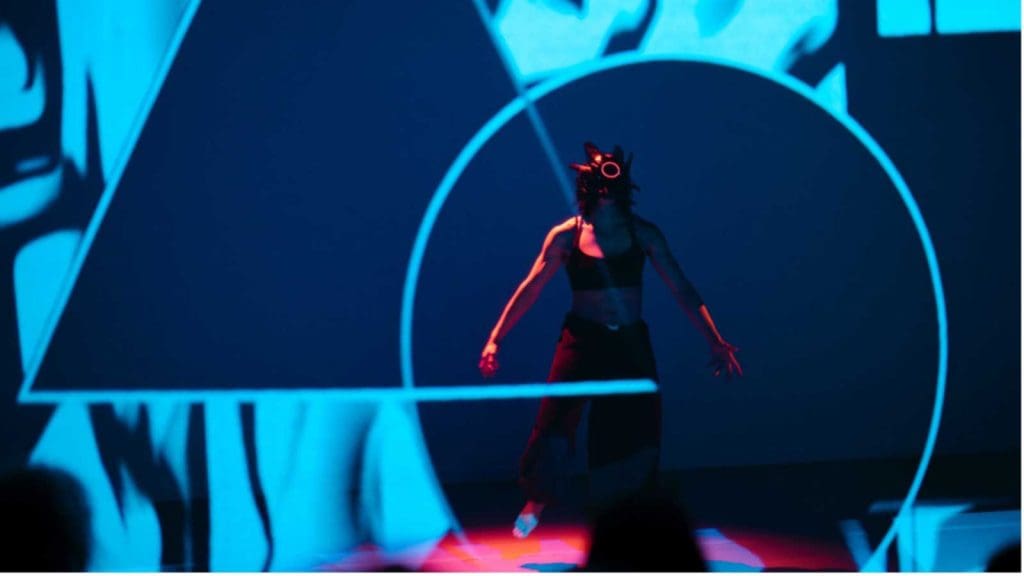
Join organizers Madrone Matishak and Sarah Bennett Davidson for an overview of the New Mexico Dance Hackathon, an initiative bringing together dance and new media artists to experiment and create innovative work across performance, installation, and film. This info session offers a look at past projects, insights into the creative process, and details on how to apply for this year’s program, culminating in final presentations at UNM ARTSLab this July.
ARTSLab is excited to continue its partnership with Unity in Spring 2026 with two free webinars and two free 10-hour courses, open to anyone in the state of New Mexico.